
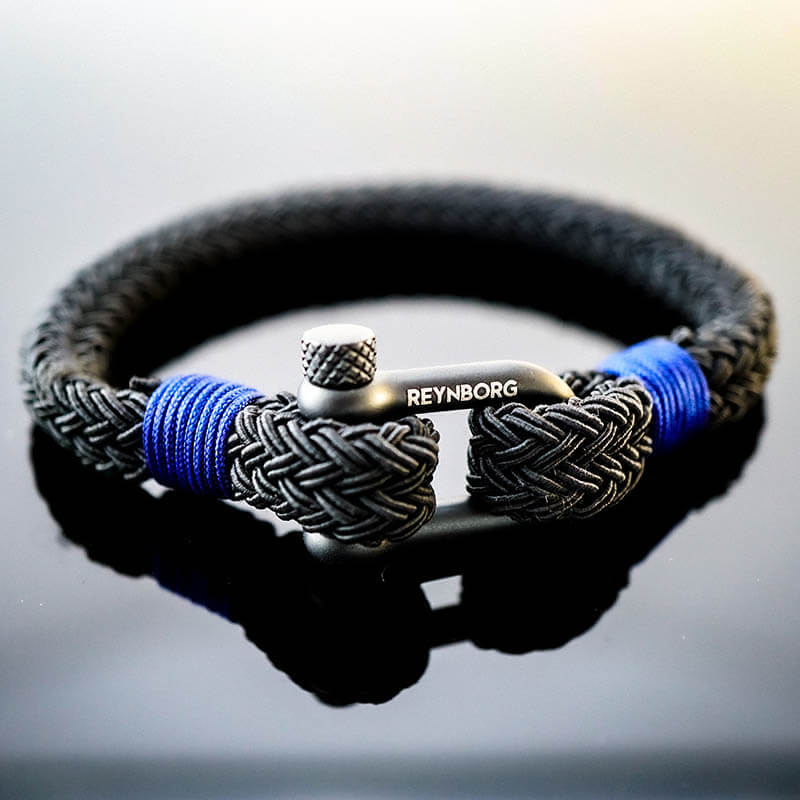
If fastening a bracelet has become frustrating, pin down the part that gets in your way: a tiny lever, a stiff release or two ends that are difficult to line up. Try that movement before buying. You can compare the colors and materials you like once you know you can put the bracelet on and take it off comfortably.
Key facts
- An easy clasp means different things to different people, so work out whether finding, holding, pressing, twisting or confirming the closure is the difficulty.
- Magnetic closures are not always one-step; some need a separate slide, twist or safety lock after the ends meet.
- If you have a pacemaker or other implant, ask your care team before choosing a magnetic clasp.
- A table lamp and a contrasting cloth beneath the bracelet can make a small closure easier to see than a ceiling light behind your head.
- A larger bracelet does not necessarily have a larger or clearer clasp, so inspect the bracelet and its closure separately.
Bring a favorite bracelet or watch into the comparison if you can. Its fastening gives you something familiar to work from. The wearing and confidence guides cover outfit choices; here the focus is on fastening, visibility and comfort.
Work out what needs to be easier
“An easy clasp” means different things to different people. You might have no difficulty gripping a small part but find it awkward to line up two ends behind your wrist. Someone else may prefer a large catch they can feel, while another person wants to avoid a clasp entirely.
Think about your current bracelet or watch. Is the difficult part finding the opening, holding the bracelet still, pressing a lever, twisting a barrel or confirming that it has closed? Once you know which movement is the problem, you can ask a jeweler much better questions.
- If tiny parts are the problem: ask to see the actual closure at its actual size, not just an enlarged product photograph.
- If gripping is uncomfortable: try designs with a broad operating surface, or a suitable cuff or slip-on bracelet.
- If lining up the ends is difficult: check whether the closure guides itself into position or requires precise alignment.
- If reaching around your wrist is awkward: practice with your forearm resting on a table, or try the other wrist.
- If the closure is hard to see: check it in your usual lighting before deciding that a different mechanism is necessary.
Compare the movement, not just the clasp name
Try the mechanism on the exact bracelet. A large lobster catch with an accessible lever may suit you better than a smaller one; a broad fold-over catch can still be awkward if its release is stiff. Here is what to check with each design:
| Closure or design | What to check with your own hands | Possible drawback |
|---|---|---|
| Lobster or spring-ring catch | Can you operate the lever and hold it open while finding the receiving ring? | A small lever or receiving ring can demand precise fingertip control. |
| Fold-over, box or push-button closure | Can you find the release and open any secondary safety catch? | A smooth appearance may conceal several steps or a firm release. |
| Screw closure | Can you grip both ends and start the thread without forcing it? | Repeated twisting and careful alignment may be inconvenient. |
| Magnetic closure | Does it need a separate slide, twist or safety lock after the ends meet? | It is not always a one-step closure, and magnets need care around some implanted medical devices. |
| Sliding closure or adjustable cord | Can you hold the bracelet steady while moving the slider or knots? | Adjustment may still require two hands; loose tails can get in the way. |
| Open cuff | Can it pass over the side of your wrist comfortably and sit securely? | A poorly sized opening can make it uncomfortable or insecure. |
| Elastic beads or slip-on bangle | Can it pass over your hand comfortably and then fit your wrist? | Easy entry over the hand does not necessarily mean a good fit on the wrist. |
To avoid a fastening altogether, try a cuff or elastic bracelet. Check bead size and weight, the cuff opening and any pressure at its ends. Don’t keep bending a rigid cuff to make it fit; ask the seller whether that design can be adjusted.
Try a complete putting-on and taking-off routine
In a shop, ask someone to demonstrate the closure once, then try it yourself on the wrist you intend to use. Holding a clasp between both hands in front of you is a useful first check, but fastening it on your wrist is the part that matters.
- Sit down and rest your forearm on a stable surface.
- Open the bracelet, noting the direction of any catch, slide or thread.
- Put it around your wrist without stretching or forcing the bracelet.
- Close it and check that every required fastening is engaged, following its instructions.
- Move your wrist, then open and remove it again.
Repeat it if you’re unsure. If a salesperson has to finish the fastening each time, think about whether you’ll have that help at home. A different mechanism may be easier to manage.
Online, ask for a short video of the exact closure. “Easy fastening” in a description tells you less than seeing how many steps it takes. If you want the bracelet engraved, check the fit and closure first if the seller allows it, and ask whether an engraved piece can be returned.
Make small details easier to see
Before you change bracelets, try changing where you fasten one. A table lamp lights the closure much better than a ceiling light behind your head.
Try a plain cloth beneath the bracelet: dark for a pale metal closure, or light for a dark one. See which background makes the opening easier for you to find. Move the lamp if reflections on polished metal obscure it, and use your usual reading glasses or magnifier if they help with close details.
The closure itself matters too. Ask whether the opening has a visible groove or a release you can locate by touch. A decorative seam that looks like a release can be confusing; a demonstration should make clear which part actually moves. A bigger bracelet doesn’t always have a bigger or clearer clasp, so look at the clasp on its own.
Check comfort during ordinary movements
Turn your palm up and down, bend your wrist and rest your arm on a desk. Notice whether the clasp presses into the underside of your wrist, a cuff end digs in or beads become uncomfortable under your arm.
Then try it with the sleeve or watch you usually wear. Extra width or a bulky catch can be annoying beneath a fitted shirt cuff even when it feels fine with a T-shirt. If you wear a watch, you may prefer the bracelet on the opposite wrist simply to give both pieces more room.
Go by your own wrist measurement and the seller’s sizing instructions, not an assumed size for older men. A chain, thick beaded bracelet and rigid cuff do not fit in identical ways. Our guide to how a men’s bracelet should fit explains the differences in more detail. Leave yourself room to remove the piece; if it feels restrictive or hurts, take it off instead of trying to get used to it.
A specific caution about magnetic closures
Magnetic closures suit some people, but they don’t solve every fastening problem. If you have a pacemaker, implantable defibrillator or another implant with magnet precautions, check the device guidance and ask your care team before choosing a magnetic bracelet.
Keep the bracelet easy to live with
Keep the opening instructions somewhere you can find them. If the closure becomes unusually stiff, loose or unreliable, leave the bracelet off until it has been checked. Arrange a repair if a gate stays open or a catch no longer engages. Avoid forcing it with household tools; our guide to taking a bracelet off without damaging the clasp covers careful removal.
Once you have found a fastening you can use comfortably, compare the finishes and colors you enjoy. For outfit ideas, see our guide to bracelets for men over 50.