
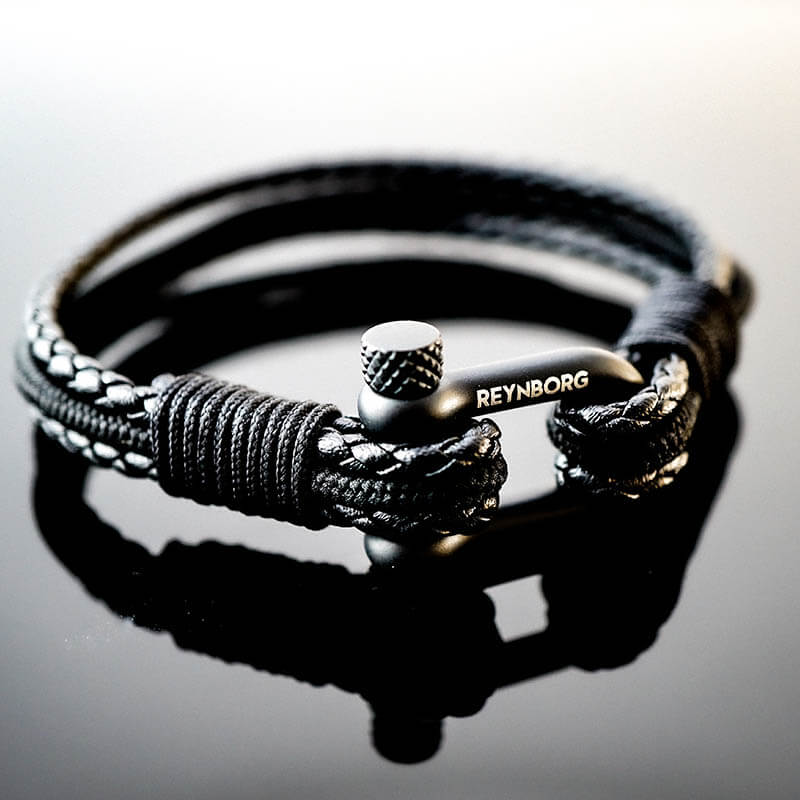
If you already wear black shoes or a dark watch strap, a black bracelet gives you a familiar color to work with. Compare the width and finish as well: a wide, shiny black chain can stand out more than a slim silver bracelet.
Key facts
- Width and shine change the effect: a broad polished black cuff creates a strong band, while a thin matte cord is a smaller detail.
- Black contrasts with a white shirt or pale linen sleeve, so brown leather, gray cord or simple metal may suit a mostly light wardrobe.
- A label like “black steel” isn’t enough on its own. The listing should name both the base metal and the black finish.
- A black bracelet’s appearance says nothing about whether it is waterproof, scratchproof or suitable for sensitive skin.
- Compare one black bracelet with one other color against the same shirt, watch and shoes, then bend your wrist and rest it on a desk.
When black makes choosing easier
Look at the clothes you wear in an ordinary week. If that means jeans, gray T-shirts, navy shirts, black sneakers or a charcoal jacket, a simple black bracelet has several obvious outfits to work with. It repeats a small detail already there.
A black cord bracelet with a silver clasp can sit alongside a silver wedding band; black leather can work with brown boots. Look at them together. You don’t need to change your buckles, buttons or other accessories to match.
Black is also useful when you want to experiment with texture. Smooth leather, braided cord and round beads can all be the same color while looking quite different. Keeping the color simple lets you find out which shape feels like you.
Three outfits to picture before buying
| Your usual outfit | A black bracelet to consider | What to check |
|---|---|---|
| Jeans, a plain T-shirt and sneakers | A single slim cord or leather bracelet | Whether the clasp or knot feels comfortable when you rest your wrist on a table |
| A navy shirt, chinos and a watch | A narrow black bracelet with a small metal detail | How it looks with the watch; try the opposite wrist if the two feel crowded |
| A charcoal overshirt, dark trousers and boots | A textured black braid or a small-bead bracelet | Whether the texture adds enough interest without making the wrist feel bulky |
Picture the bracelet with three of your own outfits. Use clothes you reach for often, so you can imagine when you would put it on.
Width, shine and contrast
Width and shine make a big difference. A broad polished black cuff catches the light and creates a strong band around the wrist. A thin matte cord is a smaller detail. Large black beads may feel more noticeable than a narrow bracelet in a lighter color.
Black also creates contrast against a white shirt or a pale linen sleeve. That can look good, but it won’t blend in. If your wardrobe is mostly cream, light blue and soft earth tones, brown leather, gray cord or a simple metal bracelet may feel more at home.
Look at which parts are black
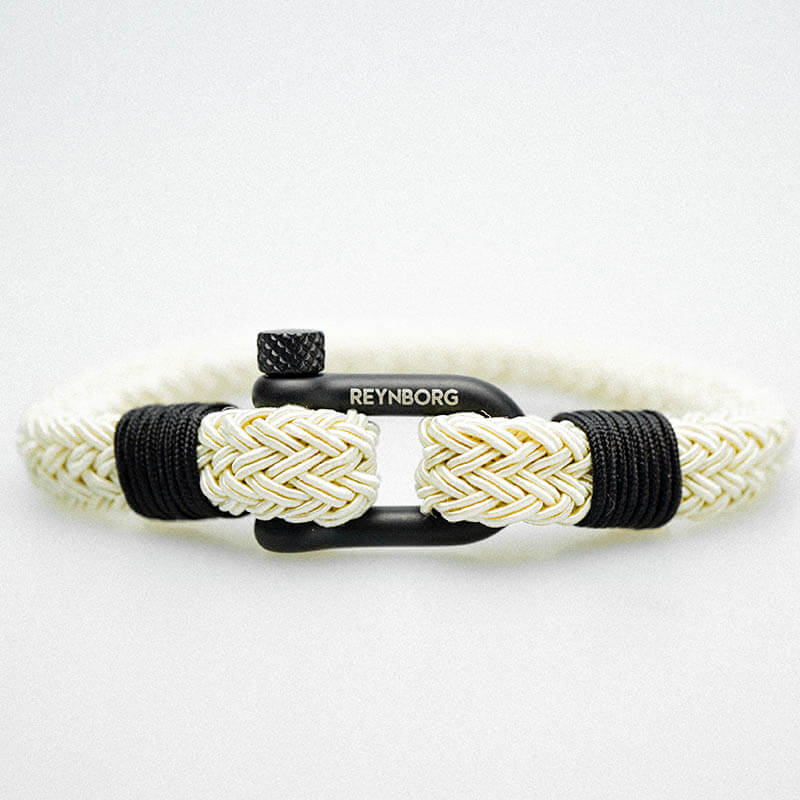
A bracelet can have black fittings while most of its band is a different color. In this product photograph from Reynborg, the light-colored braid contrasts with black bindings and hardware. If you like black as an accent but don’t want an all-black band, that’s another look to try. The photo shows the colors; check the written description for the materials.
Choose the material separately from the color
Look for the band material, fittings and finish in the written description. Black leather with metal hardware, woven cord, beads and coated metal need different fit and care instructions.
- Leather: consider whether you prefer a smooth strip or a braid, and whether the clasp looks right beside your other accessories. Our guide to wearing a leather bracelet explores that choice further.
- Cord: check how the adjustment works and how much loose cord remains once it fits. A neat bracelet in the product photo may have long ends on a smaller wrist.
- Beads: look for the bead size, material and fastening method. Small matte beads and large glossy beads can give very different results, even when both are black.
- Black metal: ask what the base metal and the black finish are. “Black steel” alone doesn’t tell you enough.
Take two made-up listings: “black braided leather with black-plated steel hardware” and “black nylon with an uncoated steel clasp.” The first tells you the fittings are coated; the second has a bare steel clasp. Both are black bracelets, but they’re built differently.
Ask the seller how to clean the finish. And don’t assume from its looks that a black bracelet is waterproof, scratchproof or suitable for sensitive skin.
Try black alongside another color
Shortlist one black bracelet and one other color you like. Compare them with the same shirt, watch and shoes, ideally on your wrist. Notice the overall appearance, then move your hand, bend your wrist and rest it on a desk. A color you love won’t make an awkward clasp comfortable.
Choose the one you would reach for with those clothes. For sizing, fastenings and the other buying decisions, see how to choose your first bracelet.
Wear it on a few ordinary days. The one-week plan for a first bracelet can help you work out whether you are getting used to jewelry or finding the clasp, weight or fit uncomfortable. You can also browse the wearing and confidence guides for more outfit ideas.