
To match a bracelet and phone case, give them one thing in common: a color, a similar finish or a small repeated detail. You can also let one stand out while the other stays plain. An exact matching set is only one option; a case you already carry and a bracelet you already enjoy can work just as well together.
Key facts
- A bracelet and phone case can be paired by repeating a color, contrasting their surfaces or letting one piece act as the single accent.
- Navy with blue, brown with tan or gray with silver-colored details can connect the two pieces without reproducing an exact shade.
- A clear case brings the phone’s own color into the pairing, so the bracelet is best compared with the phone inside the case.
- A case’s color and texture tell you nothing about what it’s made from or how well it protects the phone.
- Don’t hang a phone from a bracelet unless it was made as a phone strap.
Start with whichever item you want to keep. If your phone case is staying, use it to narrow the bracelet choice. If you wear the same bracelet every day, choose a case around that.
Choose the connection you want to see
Look at the back of your phone case beside your wrist. Notice the largest area of color first, then the surface and any visible pattern. A tiny camera-ring detail can be a nice connection to a clasp, but it does not have to organize the whole combination.
Three approaches are easy to try:
- Repeat a color. Navy with blue, brown with tan or gray with silver-colored details can connect the two pieces without reproducing an exact shade.
- Contrast the surfaces. Try a smooth case beside a braided bracelet, or a patterned case beside a plain band. The connection can be a shared color while the textures differ.
- Choose one accent. Pair a colorful case with a quiet bracelet, or give a bright bracelet a plain case as a backdrop.
You can combine those ideas, but start with one. If you want advice for the rest of the outfit too, the guide to choosing a bracelet color from your wardrobe takes the wider view.
Three pairings to try with your own pieces
These are styling ideas, not photographed sets. Swap in the colors and bracelets you have.
Navy case and blue cord: repeat a color without matching exactly
Try a plain navy case with a medium-blue cord bracelet and a white or pale-blue shirt. The dark case and lighter cord share a color family while remaining visibly different. A small silver-colored clasp can be a separate detail; you do not need a case with matching hardware.
For a quieter version, choose cord closer to the case’s dark blue. For more contrast, try a brighter blue at the wrist. If the case is already patterned, pick one blue from the design and keep the bracelet simple.
This approach is useful when you like color but do not want the accessories to become the main feature of your outfit. Compare it with your usual sleeves: blue cord that looks subtle beside a navy sweater may stand out much more against white.
Textured black case and brown bracelet: connect through contrast
If your case is black with a pronounced texture, try a narrow brown bracelet, dark jeans and a cream T-shirt. The brown gives the wrist a different color without requiring a bright accent. Start with a plain band if you want the case’s texture to be the more noticeable surface; try a braid if you enjoy texture on both pieces.
Compare that with black on black: the same case beside a black bracelet. This gives you a closer color connection while leaving the bracelet’s shape, clasp and surface to provide the difference. A smooth black band can make the case’s raised texture more apparent; black cord gives a different outline without introducing another color.
For a third option, try black with blue. Dark-blue cord makes a quieter contrast, while a brighter blue puts more attention on the wrist. Compare the brown, black and blue choices with the shirt you actually wear. You can prefer the black combination with white sleeves and the brown one with cream without needing a different case.
A relatively thick case may already look substantial in your hand. A narrow bracelet is one way to balance that visually, but a broad bracelet can work if you like the stronger shapes together. Go by what you see; a bulky case doesn’t set a rule for bracelet size.
All of this is about looks. A case’s color and texture tell you nothing about what it’s made from or how well it protects the phone. To choose the bracelet construction itself, see leather, cord, steel or beads.
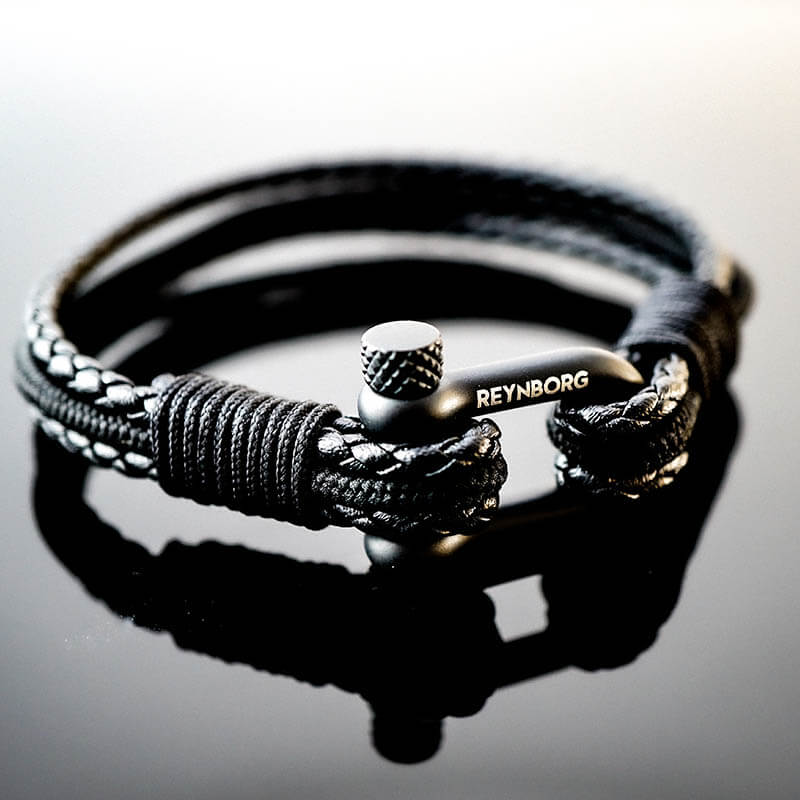
The Reynborg bracelet below pairs a dark band with contrasting strand textures. Hold your own case up to it and ask whether you’d repeat the dark color or play up the difference in texture. The photo shows the bracelet on its own, not a matching set.
Plain gray case and burgundy bracelet: let the wrist be the accent
Try a gray case with a burgundy bracelet and a charcoal or navy outfit. Keep the case plain so the bracelet supplies the stronger color. You can repeat burgundy in a shirt stripe if you already have one, but the bracelet can also be the only burgundy item.
Reverse the arrangement if your favorite case is colorful. A burgundy case with a plain gray or silver-colored bracelet gives the phone more emphasis. Decide which piece you want to notice first; matching more accessories isn’t the goal.
With a printed case, let the print act as the accent and try an unpatterned bracelet. Choosing one background color from the design is often an easier starting point than finding a bracelet with a similar print.
Work with the case you actually carry
A clear case brings the phone’s visible color into the pairing. Compare the bracelet with the phone inside it, not with a photo of the empty case. A cream-colored phone and a dark phone can give the same clear case quite different appearances.
For a case with a large illustration, lettering or several colors, decide which part you want to echo. A thin colored border might be enough; repeating every color can make the bracelet choice needlessly difficult. A plain bracelet is also a perfectly good partner for a design you want to leave alone.
Consider what is usually visible. A case’s back is prominent when the phone is in your hand, but you may only see its edge when it lies face up. If matching matters to you, judge the pairing in the situations where you will actually enjoy seeing it.
Include your watch, glasses and sleeves
Once the bracelet and case look good together, put them back into your ordinary outfit. Your watch may already be the strongest detail near your wrist. You could keep the bracelet small, use it to repeat the case color, or leave the case as an independent accessory.
There is no need to coordinate your phone with every buckle and fitting you own. Choose the pieces you see and wear most. If glasses are part of that daily combination, matching bracelets to glasses and other accessories offers examples built around the frames.
Also check whether you like the bracelet when the phone is in your pocket. A good pairing should leave you with a bracelet you still want to wear on its own.
Make the final choice without buying a matching set
Compare two combinations using your own pieces, or product images if you are considering a purchase. For color, use pictures taken in similar lighting where possible; a warm indoor image and a bright outdoor image can make a close comparison difficult. Then choose the connection you prefer: repeated color, different texture or one clear accent.
Matching colors says nothing about whether a case fits your phone, how well it protects it or whether its hardware suits your routine. And don’t hang your phone from a bracelet unless it was made to be a phone strap. The practical case-and-bracelet worksheet takes you through fit, controls, fittings and charging separately from the colors.
For more ways to work a bracelet into everyday clothes, browse the bracelet style guides. If the pairing is a gift, see planning the two pieces separately, which covers the recipient’s phone fit as well as the bracelet.